

Stretching is an important part of overall fitness, and few muscle groups benefit more from it than the hamstrings. Located at the back of the thigh, the hamstrings consists of three muscles: the semitendinosus, semimembranosus, and biceps femoris.
These muscles play a critical role in activities that involve running, jumping, bending, and even walking. Tight or inflexible hamstrings are often associated with discomfort, reduced performance, and a higher risk of injury. This article will explore the importance of hamstring flexibility, the benefits of stretching, various stretching techniques, and some practical tips for making the most out of your hamstring stretches.
Why is Hamstring Flexibility Important?
- Improved Range of Motion: Flexible hamstrings allow for a greater range of motion in the hips and knees, which is crucial for various athletic activities like sprinting, squatting, and jumping. Enhanced flexibility ensures that your movements are not restricted and that you can move more efficiently during both daily activities and sports.
- Injury Prevention: Tight hamstrings are often associated with a higher risk of muscle strains or tears. Since these muscles are responsible for knee flexion and hip extension, a lack of flexibility can cause compensatory movements, leading to overuse injuries. Regularly stretching the hamstrings can reduce the risk of injuries, particularly in sports that involve high-speed running, such as soccer, basketball, and track and field.
- Improved Posture: Hamstring tightness can contribute to poor posture, particularly anterior pelvic tilt, which can cause the lower back to arch excessively. Stretching the hamstrings promotes better posture by balancing the forces around the pelvis and spine, reducing the strain on the lower back and promoting a more upright stance.
- Alleviation of Lower Back Pain: The hamstrings are directly connected to the pelvis, which in turn affects the lower back. When the hamstrings are too tight, they can pull on the pelvis, causing lower back discomfort or pain. By stretching and elongating these muscles, you can reduce tension in the lower back, leading to less pain and discomfort, particularly for individuals who sit for extended periods.
- Enhanced Athletic Performance: For athletes, hamstring flexibility can lead to improved performance by enabling more efficient and explosive movements. Whether you are a sprinter trying to gain speed or a dancer aiming for higher leg lifts, flexible hamstrings provide the foundation for better biomechanics.
Types of Hamstring Stretches
There are several types of stretches that target the hamstrings, each with its benefits and applications. Broadly speaking, these stretches fall into two categories: static and dynamic stretching.
Static Hamstring Stretches
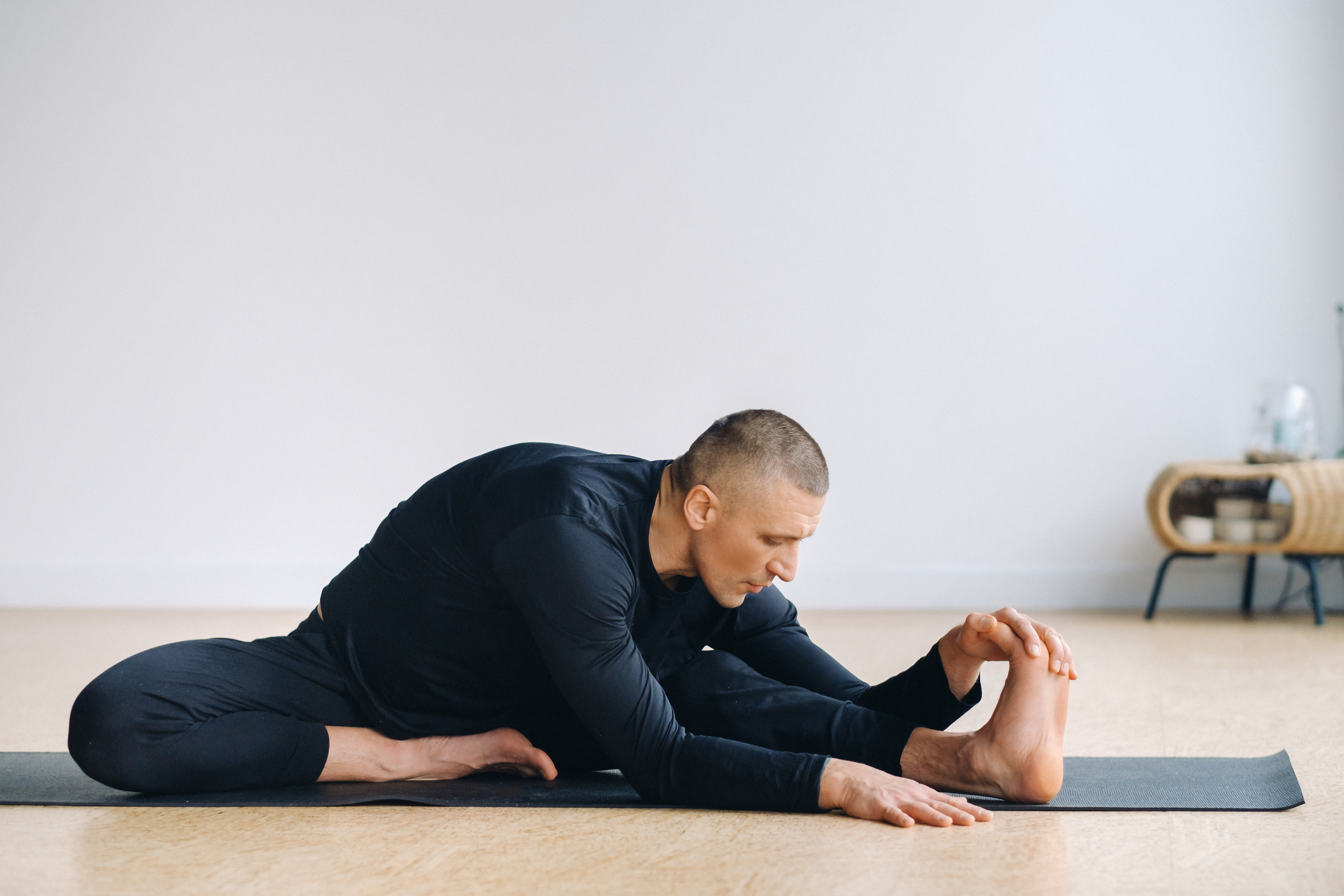
Static stretching involves holding a stretch for an extended period, usually between 15 and 60 seconds. This method is ideal for increasing flexibility and is typically done after a workout when muscles are warm and pliable.
Seated Forward Bend

- Sit on the floor with your legs extended straight in front of you.
- Slowly bend forward from your hips, reaching for your toes. You can hold onto your calves or ankles if you can’t reach your feet.
- Hold this position for 30 seconds to 1 minute, feeling the stretch in the back of your thighs.
- Focus on lengthening your spine rather than rounding your back to deepen the stretch in the hamstrings.
Standing Hamstring Stretch:

- Stand upright and place one foot on an elevated surface such as a bench or chair.
- Keep your leg straight, but avoid locking the knee.
- Hinge at your hips and lean forward, reaching toward your toes while keeping your back flat.
- Hold the stretch for 20 to 30 seconds before switching legs.
Lying Hamstring Stretch with Strap:

- Lie on your back with one leg extended on the ground and the other lifted toward the ceiling.
- Loop a resistance band or towel around the sole of your raised foot.
- Gently pull on the strap to bring your leg closer to your torso while keeping both legs straight.
- Hold for 30 seconds, then switch sides.
Dynamic Hamstring Stretches
Dynamic stretching involves controlled movements that prepare the muscles for activity by mimicking the movements they’ll perform during exercise. These stretches are best done as part of a warm-up routine.
Leg Swings:
- Stand upright with your feet shoulder-width apart.
- Hold onto a sturdy surface for balance, like a wall or a pole.
- Swing one leg forward and backward in a controlled manner, keeping the movement smooth and avoiding any jerky motions.
- Repeat for 10 to 15 swings, then switch legs.
Toy Soldiers:
1.Stand with your feet hip-width apart.
2.Extend your arms straight out in front of you.
3. Keeping your leg straight, kick one leg up to touch your opposite hand.
4. Alternate legs and perform 10 to 15 repetitions on each side.
Tips for Effective Hamstring Stretching
- Warm Up Before Stretching: Stretching cold muscles can lead to strains or other injuries. Before stretching your hamstrings, it’s important to warm up with some light cardio exercises like walking, jogging, or cycling for about 5 to 10 minutes.
- Avoid Overstretching: Flexibility should be increased gradually. Overstretching or bouncing during a stretch (ballistic stretching) can lead to muscle strains or tears. Instead, focus on moving slowly and holding the stretch at the point where you feel mild tension, not pain.
- Incorporate Both Static and Dynamic Stretches: While static stretches are great for improving flexibility, dynamic stretches are essential for preparing your hamstrings for activity. Incorporating both types of stretching into your routine ensures that your muscles are both flexible and ready for action.
- Consistency is Key: Like any aspect of fitness, hamstring flexibility requires consistent effort. Stretching 2 to 3 times per week can significantly improve flexibility over time. However, stretching every day for just a few minutes can yield faster results.
- Breathe and Relax: Breathing deeply during stretches helps you relax and allows the muscles to release tension. Exhaling as you deepen the stretch can help you go further without straining.
Common Mistakes to Avoid
- Rounding the Back: Many people mistakenly round their back when performing hamstring stretches. This reduces the effectiveness of the stretch and can lead to lower back discomfort. Focus on hinging at the hips and keeping your spine neutral for a deeper and more effective stretch.
- Locking the Knees: Locking your knees during hamstring stretches puts unnecessary strain on the joints and can cause injury. Keep a slight bend in the knees to protect them while still getting a good stretch.
- Stretching Without Warm-up: Stretching cold muscles increases the risk of injury. Always ensure your muscles are warmed up before engaging in static stretches.
Conclusion
Stretching the hamstrings is essential for maintaining flexibility, preventing injuries, improving posture, and enhancing athletic performance. Incorporating both static and dynamic stretches into your routine ensures a balanced approach to flexibility and mobility. By following the proper techniques and avoiding common mistakes, you can unlock the full potential of your hamstrings, leading to better movement, reduced discomfort, and improved overall fitness.


Leave a Reply